Measure once, choose with confidence. Our compression socks and wrist gloves should feel snug and supportive, like a firm, even hug, but never so tight that they cut off circulation.
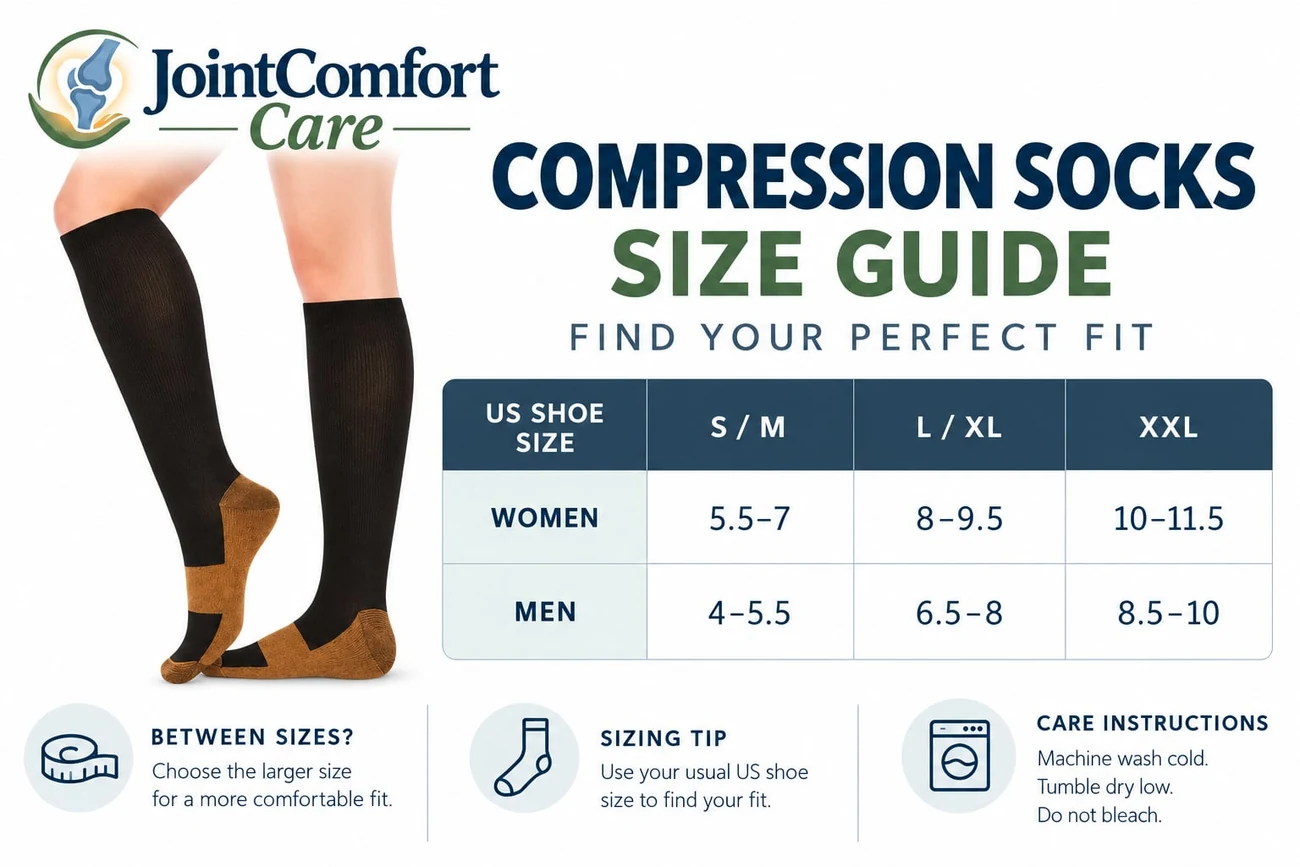
Our knee-high copper compression socks are sized by your usual US shoe size.
Compression sock sizes by US shoe size
US shoe size
S / M
L / XL
XXL
Women
5.5 – 7
8 – 9.5
10 – 11.5
Men
4 – 5.5
6.5 – 8
8.5 – 10
How to choose your sock size
Start with your shoe size. Use your usual US shoe size and find it in the chart above.
Check for swelling. If your feet or ankles swell during the day, size by the larger measurement, since a sock that fits in the morning can feel snug by evening.
Between sizes? Choose the larger size for a more comfortable fit.
Put them on smoothly. Pull the sock up evenly with no twists or folds, and make sure the heel sits in the heel of your foot.
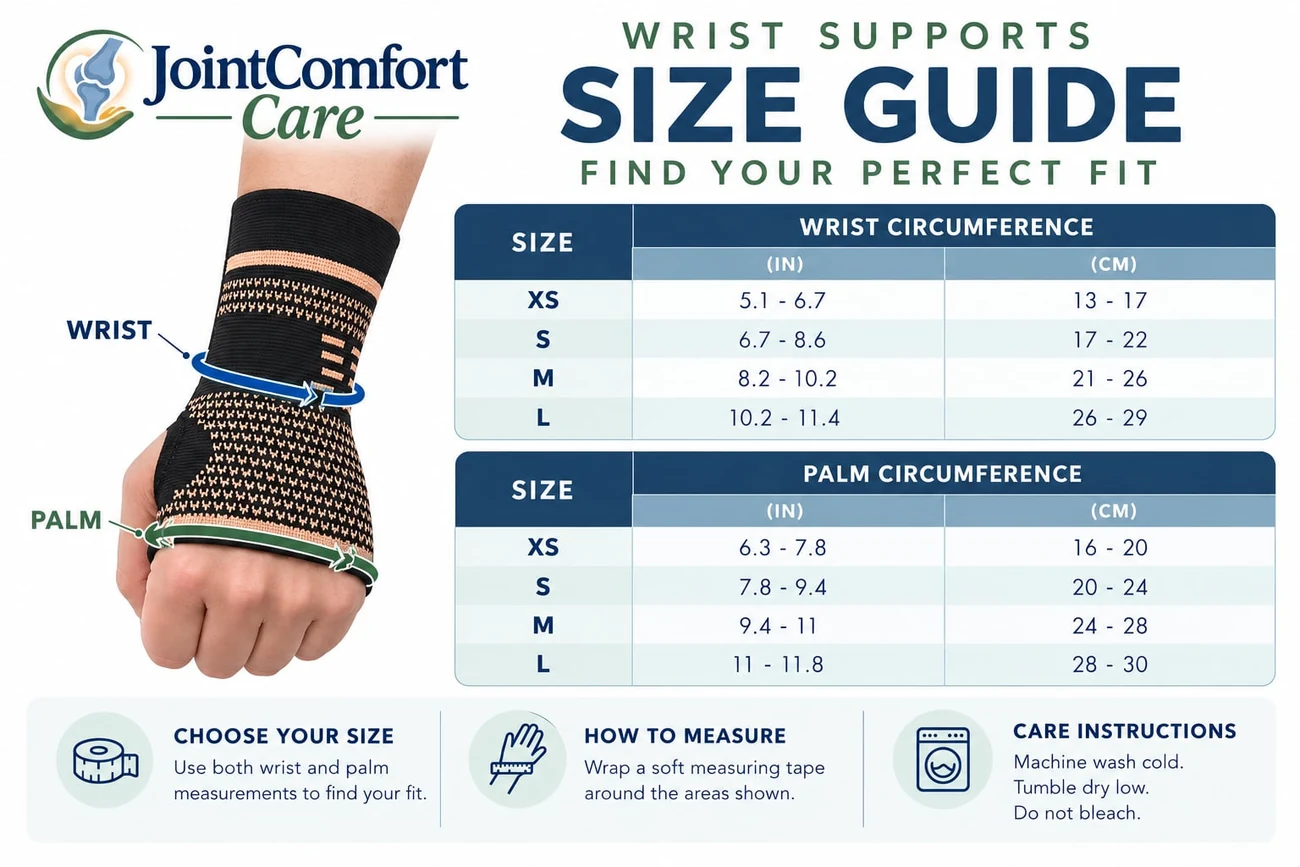
Our wrist compression sleeves (arthritis gloves) are sized to your hand. Measure your wrist and your palm, then use both to find your fit.
Wrist circumference
Size
Inches
Centimeters
XS
5.1 – 6.7
13 – 17
S
6.7 – 8.6
17 – 22
M
8.2 – 10.2
21 – 26
L
10.2 – 11.4
26 – 29
Palm circumference
Size
Inches
Centimeters
XS
6.3 – 7.8
16 – 20
S
7.8 – 9.4
20 – 24
M
9.4 – 11
24 – 28
L
11 – 11.8
28 – 30
How to measure your wrist and palm
Use a soft measuring tape. If you don't have one, use a piece of string or a strip of paper, mark where it meets, and measure it against a ruler.
Measure your wrist. Wrap the tape once around the narrowest part of your wrist, just above the wrist bone. Keep it flat and snug against your skin, but don't pull it tight.
Measure your palm. With your hand relaxed and flat, wrap the tape around the widest part of your palm, just below the knuckles and across the base of the thumb, as shown in the chart.
Match both numbers. Find your wrist and palm measurements in the charts. If they point to two different sizes, choose the larger size for all-day comfort.
Measure when swelling is lowest. This is often in the morning. Measure your dominant hand first, and check the other hand too, since the two can differ.
The purpose of a compression sock or glove is to apply gentle, even pressure that supports your circulation and joints. It should feel firm and supportive, like a snug hug, not tight enough to cut off blood flow or cause pain.
Just right
Feels snug and supportive, with even pressure
Stays in place without sliding or rolling down
Comfortable to wear and move in
Leaves no deep, painful marks when you take it off
Too tight
Pain, throbbing, or a pinching feeling
Numbness or tingling in your fingers or toes
Skin that looks pale, bluish, or unusually cold
Swelling bulging over the top edge, or deep marks that stay
Too loose
Slips down or bunches up
Wrinkles or folds in the fabric
Little or no feeling of support
If it feels too tight, take it off. Remove the sock or glove right away if you notice pain, numbness, tingling, or color changes. Try the next size up, and talk with your doctor if the symptoms continue. If it is too loose, try the next size down if your measurements allow.
Fit tips
When you first wear them, start with a few hours and see how your skin and joints feel.
Smooth the fabric flat, with no twists, and don't roll the top edge down, which can create a tight band.
Between sizes? Choose the larger size for comfort.
If you have diabetes, nerve problems, poor circulation, a skin condition, or a history of blood clots or heart problems, ask your doctor before wearing compression products.
This guide is general information and not medical advice. Our products are not intended to diagnose, treat, cure, or prevent any condition. For help choosing a size, email support@jointcomfortcare.com or see our Return & Refund Policy for wrong-size returns.